
Few think twice about hallways. Often the narrowest part of the home, and the most high-traffic area, your hallway flooring must be durable. Shoes track dirt inside. Coats drip rain onto floors. Pets rush past. Children toss their bags wherever. All of it has consequences for your floor.
Because of this, hallway flooring has a much harder job than flooring anywhere else in the home. Something that works beautifully in a bedroom or living room can look tired in a hallway within months. Choosing the right flooring here isn’t about trends or show-home looks, it’s about realism.
The best flooring for hallways is flooring that can cope with the footfall of day to day life and still look good while doing it.
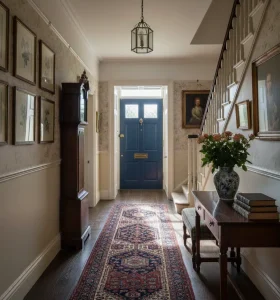
A hallway never really rests. Footsteps pass here throughout every day, sometimes with shoes still on from outside, hardly noticed. With each step, small particles stick beneath feet, rubbing against the floor’s finish. Gradually, these motions leave flat spots, marks, lines – most obvious around the front door. The more traffic, the clearer the damage becomes.
Moisture doesn’t help either. Even on dry days, damp soles and umbrellas bring water into the space. In winter, it’s worse. Rain, frost, and condensation all end up on the floor, and not every flooring type is made to handle that well.
Picture how hallways stretch out; tight, straight paths where every scuff catches the eye. Because of their shape, flaws show up quicker here compared to open spaces. Over time, that constant attention makes the floor seem older sooner. It simply gets noticed more.
When life gets messy, luxury vinyl tiles flooring keeps up without fuss. Hallway traffic? No problem, LVT is resistant to scuffs. A quick sweep and an occasional mop are usually enough to keep it clean (see our vinyl flooring care guide here). For busy households, that alone can be a big selling point. Toughness meets low drama, day after day.
When you walk on a good LVT floor, it holds up even in a high traffic area. Water? Not an issue for LVT, moisture just rolls off without drama. Unlike wood or stone, small scratches do not stick out like sore thumbs. Daily life throws things at floors; LVT handles it quietly, without fuss.
Lately, appearances of LVT have shifted quite a bit. Hallways often lean toward wood-like finishes since they bring comfort minus the hassle of actual timber. On top of that, stone or concrete looks hold their own when heavy usage is likely, plus they keep things looking clean and straightforward.
Another thing people don’t always think about is grip. Many LVT floors have built-in slip resistance, which makes them safer underfoot than highly polished surfaces when shoes are wet.
One of the best flooring for hallways options could be an engineered wood floor, though it’s not a decision to take lightly. Wood brings warmth along with charm, yet care matters more here. How long it lasts often depends on how you treat and maintain it.
When you stack materials in layers, they resist shifting caused by heat swings. This stability gives engineered wood an edge over solid timber indoors. Hallways become practical spots for such flooring – provided the surface coating holds up well.
Flooring in busy spaces holds up better with lacquer. This coating shields against spills and scuffs by forming a tough top layer. Wood treated with oil has charm, yet stains appear faster, needing repeat applications not long after. Though it feels natural, upkeep happens more often than some expect.
A mat by the door isn’t optional when there’s wood on the hall floor. Dirt staying away helps the finish stay clean longer. With regular care, engineered timber ages well, often gaining character. Little attention? Then this material might disappoint down the line.
Carpet gets written off for hallways, but it doesn’t have to be a bad choice. It just needs to be the right kind of carpet.
Deep, soft carpets are rarely a good idea in busy entrance areas. They flatten quickly and show wear paths almost immediately. Hard-wearing carpets with a lower pile or tight loop construction usually hold up far better.
Wool carpets and wool blends are often chosen because they bounce back better under pressure. Patterns are also your friend in a hallway. They disguise dirt, marks, and general wear much better than plain colours ever will.
Colour choice matters too. Very light carpets can look dirty fast, while very dark ones show every bit of fluff. Mid-tones, flecks, and subtle patterns are usually the easiest to live with.
For some homes, a runner through the hallway works well. It adds warmth and comfort while protecting the areas that get walked on the most.
Built tough, tiles and stone stand up to wet floors without fuss. When spills happen, a quick wipe is plenty, no special care needed. Foot traffic? These surfaces handle it like an old pro. Lasting under pressure, they make sense where people pass through every day.
Comfort takes a hit here. Cold underfoot when temperatures drop, hard floors show their chill most then. Sound bounces more than expected, which matters in spaces where every footstep echoes. Safety slips into question too. Shine looks sharp until someone almost falls just inside the entrance.
Over time, grout might show wear, especially in high-traffic spots. Where feet pass often, fading can happen, calling for touch-ups now and then. Even so, if strength matters most, tile holds up well in many households.
Downstairs corridors link key spaces, sometimes holding echoes. What lies underfoot changes the way sounds move through air. Tile or wood might bounce each step into a clatter. A thick rug soaks it up before it spreads.
Underlay plays a big role here. The right underlay can improve comfort underfoot and reduce noise, even with harder flooring types.
Comfort matters more than people expect. Hallways are walked through barefoot, in socks, and often half-asleep in the morning. A floor that feels unpleasant underfoot can become frustrating very quickly.
Safety is easy to overlook, but it’s important. Wet shoes on smooth flooring can be a recipe for slips, especially with children, older family members, or pets around.
Choosing flooring with some natural grip, using entrance mats, and keeping the area clean all help reduce risk. A practical hallway floor should feel secure underfoot, not something you have to tiptoe across.
What matters most with hallway floors shows up later down the line, not right away. Trouble begins when scuffs pile up fast or upkeep takes too much time.
Usage decides what floor works, not pictures. A hallway takes what your days really throw at it, so pick something that handles messes without fuss, stands up to shoes dragging debris, lasts when the kids come racing through and keeps calm during pet dashes – because real living leaves marks, and good floors just keep going.
What works in one entryway might fail in another. Each family moves through their space in its own way.
A space built for real days ahead stays clean, strong, ready – just like your entry deserves. Hunting for the best flooring for hallways near Oxford? Reach out to the Textures Flooring team today by calling 01865 311807 or fill out our online enquiry form here. We look forward to hearing from you and starting your flooring project soon!